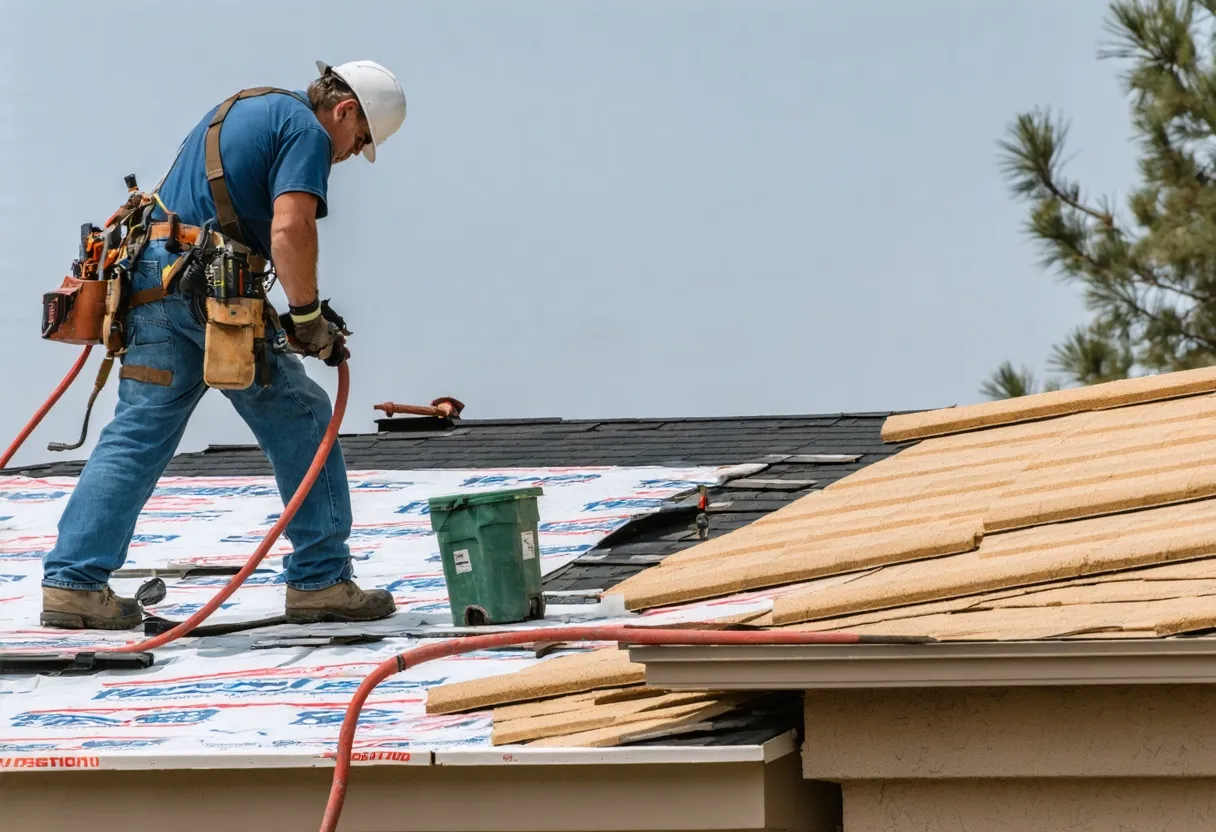
Roofing Glendale is a fully ROC-licensed roofing contractor serving Glendale, AZ and the surrounding Northwest Phoenix metro area. If you're comparing roofing companies in the Valley, the questions that actually matter are simple: is this contractor properly licensed, will they document everything an insurance adjuster needs to see, and do they understand what Arizona's monsoon season, summer heat, and hail events actually do to a roof over time? This page covers what we do, how we do it, what it costs, and how to reach us — no fabricated reviews, no invented numbers, just a straight answer to the questions you're asking before you hire someone to work on your roof.
Licensing, Credentials, and Why That's the First Thing to Check
Arizona requires roofing contractors to carry an active Registrar of Contractors (ROC) license, and any company that hesitates to give you their ROC number when asked is telling you something. Before you sign anything, ask your prospective roofer for their ROC license number and look it up directly on the Arizona ROC website — it takes two minutes and tells you whether the license is active, in good standing, and bonded for the type of work you need. We provide our ROC number on request and encourage every homeowner in Glendale to verify it independently rather than take a sales rep's word for it.
Beyond state licensing, we maintain BBB accreditation, which means we've agreed to the Better Business Bureau's standards for advertising honesty, complaint handling, and transparency. Accreditation status and current rating can change, so rather than quote you a number that might be stale by the time you read this, we'd rather you check our current BBB profile directly — that's the accurate, up-to-date source, not a claim frozen on a webpage.
Service Area: Glendale and the Northwest Phoenix Metro
Our crews work throughout Glendale, AZ, including neighborhoods in and around the 85301 and 85308 zip codes, and we regularly serve homes near State Farm Stadium and out toward Peoria, AZ. Broadly, our coverage footprint spans the Northwest Phoenix metro area, so if you're unsure whether your address falls inside our service radius, the safest bet is to call and ask — we'd rather confirm quickly than have you wait on a truck that's not coming. Homes in this part of the Valley share a common set of roofing stressors: long stretches of intense summer sun, seasonal monsoon storms that bring wind-driven rain and occasional hail, and the wear that comes from repeated heating-and-cooling cycles on tile, foam, and shingle systems alike. Understanding that shared exposure is a big part of why local experience matters more than a generic national franchise playbook.
What We Repair: Every Major Roof Type in the Valley
Glendale roofs aren't one-size-fits-all, and neither is our repair approach. We work on the four systems that make up the overwhelming majority of homes in this market, and each one fails in different ways.
Tile Roof Repair
Concrete and clay tile are common on Glendale homes because they hold up well against the sun, but tile roofs rarely fail at the tile itself — they fail underneath it. Cracked or slipped tiles, broken battens, and degraded underlayment let water find its way to the decking long before you'd notice a leak from inside. Our tile repairs start with a walk of the full field, not just the area over the reported leak, because a cracked tile three feet away is often the actual entry point. We match tile profile and color as closely as possible, reset broken battens, and replace compromised underlayment sections rather than just resealing over a hidden problem.
Shingle Roof Repair
Asphalt shingle roofs in this climate deal with UV degradation, granule loss, and wind lift from monsoon gusts. We repair damaged shingle sections, replace exposed or missing flashing around vents and chimneys, and check the underlying decking for moisture damage before closing anything back up. A shingle repair that skips the decking inspection is a repair that's likely to reopen the next time it rains.
Flat and Foam Roof Repair
Spray polyurethane foam (SPF) and flat built-up roofs are common on additions, patios, and some full-home roofs in Glendale. Foam roofs need their protective coating reapplied on a regular cycle — when that coating wears thin, the foam underneath becomes vulnerable to UV breakdown and water intrusion. We repair blistering, cracking, and ponding-water areas, and recoat sections that have reached the end of their coating life, which is usually far cheaper than a full tear-off if it's caught in time.
Emergency Roof Repair
Monsoon storms don't wait for a convenient appointment window. When wind rips off a section of tile or a flat roof starts taking on water mid-storm, we prioritize emergency calls to get a tarp or temporary seal in place and stop active water intrusion before we schedule the permanent repair. If you're dealing with an active leak right now, call first and we'll walk you through what to do while you wait for a crew.
Roof Inspection: How the Process Works
Every job starts with an inspection, whether you're calling about a specific leak or just want a baseline read on your roof's condition. Here's what that actually involves:
- Full-field walk: We inspect the entire roof surface, not just the spot where a stain appeared on your ceiling — leaks often travel before they show up indoors.
- Flashing and penetration check: Vent boots, chimney flashing, skylights, and roof-to-wall transitions are the most common failure points, so these get specific attention.
- Underlayment and decking assessment: Where we can safely access it, we check for soft spots, delamination, or moisture staining that signals a problem beneath the visible surface.
- Photo documentation: We photograph everything we find, both for your records and for insurance purposes if the damage is storm-related.
- Written estimate: You get a clear, itemized scope of work and price before any repair begins — no verbal-only quotes.
After the inspection, we explain what we found in plain language, what's urgent versus what can be monitored, and what your repair options are. We never push a full roof replacement when a targeted repair will genuinely solve the problem.
Insulation and Underlayment: The Part You Don't See
A roof's visible surface — tile, shingle, or foam — is only half the system. Underlayment is the water-resistant barrier beneath it, and it's doing most of the actual work of keeping your home dry; the surface material mainly protects the underlayment from sun and impact. When underlayment degrades, breaks down, or was installed poorly to begin with, leaks can appear in places that have nothing to do with visible surface damage. During tile and shingle repairs, we routinely find underlayment that's outlived its usefulness even though the tiles or shingles above it look fine. We'll flag this when we see it and explain your options rather than just patching over a bigger issue.
Attic insulation also plays a bigger role in roof longevity than most homeowners expect. Poor attic ventilation and insulation trap heat against the underside of the roof deck, which accelerates material breakdown over time and drives up cooling costs. If we notice ventilation or insulation issues during an inspection, we'll mention it — it's not something we push as an upsell, but it's relevant information for the long-term health of your roof.
What Drives the Cost of a Roof Repair
No two repair quotes look the same because no two roofs have the same problem. The main factors that move the price:
- Roof type and material: Tile repairs involve matching and resetting existing material; shingle and foam repairs price differently based on square footage and material cost.
- Extent of underlayment or decking damage: A surface-level fix is far less involved than a repair that requires replacing decking or a large underlayment section.
- Roof pitch and accessibility: Steeper roofs and harder-to-access areas take more time and safety setup.
- Number and complexity of penetrations: More vents, skylights, and flashing details mean more potential leak points to address.
- Storm vs. wear-and-tear damage: Storm-related damage may be covered by your homeowner's insurance, which changes the paperwork involved but not necessarily the repair itself.
We give written, itemized estimates so you can see exactly what you're paying for — labor, materials, and any decking or underlayment replacement broken out separately, not bundled into a vague lump sum.
Financing Options, Including 0% Offers
Roof repairs and replacements aren't always something you can pay for out of pocket on short notice, and we don't think that should be a barrier to getting a roof fixed properly. We offer financing options for qualified customers, including promotional 0% interest offers depending on the plan and term you choose. Ask us about current financing terms when you get your estimate — we'll walk you through the options side by side so you can compare monthly payments against paying up front, with no pressure either direction.
Warranties
We stand behind our workmanship, and materials we install carry the warranty coverage provided by their manufacturers. When we give you a repair estimate, we'll also tell you plainly what's covered under our workmanship warranty and what falls under the manufacturer's material warranty, so you know exactly what recourse you have if something doesn't hold up the way it should.
Insurance Damage Documentation
If your roof damage is storm-related — hail, wind-driven debris, or a monsoon microburst — your homeowner's insurance may cover part or all of the repair. The documentation step matters more than most homeowners realize: adjusters work from photos, measurements, and a written scope of damage, not from a phone description. When we inspect a roof for storm damage, we document it thoroughly with dated photos and a detailed written report you can hand directly to your insurance adjuster. We're happy to walk your roof with an adjuster if that's useful, and we can explain, in plain terms, the difference between damage that's typically covered and wear-and-tear that typically isn't — so you go into that claim conversation with realistic expectations.
Why Local Climate Experience Matters
Arizona roofing isn't the same discipline as roofing in a milder or wetter climate, and a crew that mostly works elsewhere will approach your roof with the wrong assumptions. Around Glendale, roofs deal with a specific combination of stressors: prolonged, intense summer sun that bakes surface materials, monsoon storms that arrive fast with heavy wind and occasional hail, and daily heating-and-cooling cycles that put real stress on tile, foam coatings, and underlayment over the years. Materials expand and contract as temperatures shift between day and night, and that repeated movement is a major driver of cracked tile, foam blistering, and flashing that works itself loose over time. A repair approach built for this climate accounts for that cycle — using materials and techniques rated for sustained heat exposure and monsoon wind, not just whatever's standard in a milder market. That's the expertise we bring to every job, paired with upfront pricing so you know what you're paying and why before any work starts.
Business Hours and Reaching Us
We operate on standard local business hours for scheduled inspections, estimates, and repairs, with priority handling for emergency calls involving active leaks or storm damage. The most reliable way to confirm current hours or get on the schedule is to call directly — we'll give you a real appointment window rather than a vague callback promise.
Get Your Upfront Quote
No pressure, no guesswork — just a clear price for your roof.
Ready for a Roof Built for Arizona?
Reach out for a straightforward, upfront quote.